
In medical trade, one thing has remained constant for decades: buyers rarely purchase serious medical equipment the same way they buy ordinary consumer goods.
A hospital does not simply click “buy now” on a chemistry analyzer. A laboratory does not casually add a hematology analyzer to a cart and check out in minutes. A county hospital procuring theatre equipment, diagnostic devices, reagents, or biomedical spare parts needs quotations, specifications, supplier credibility, delivery timelines, warranty details, after-sales support, and often multiple bids for comparison.
This is why the Request for Quotation, commonly known as an RFQ, remains one of the most important tools in medical procurement.
But the way RFQs are handled is changing.
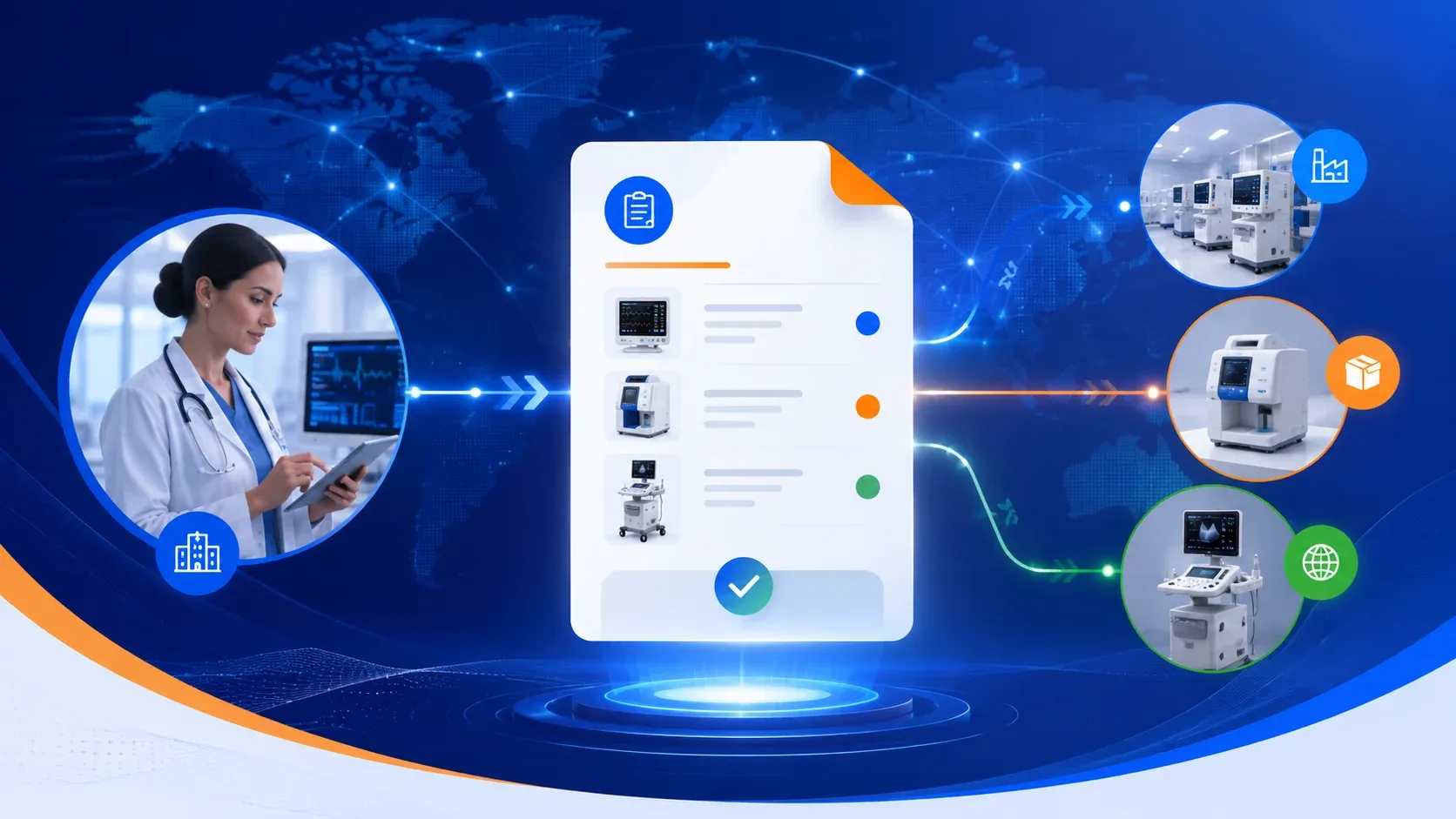
For years, many healthcare buyers relied on scattered emails, phone calls, referrals, trade fair contacts, and supplier lists. The process was slow, fragmented, and often limited to the few suppliers already known to the buyer. DigimedExpo is changing that by bringing RFQs into a specialized digital medical trade environment where buyers, suppliers, distributors, logistics companies, and biomedical engineers can connect more efficiently.
Medical Procurement Is Not Ordinary E-Commerce
In general e-commerce, price and delivery speed may be enough to complete a transaction. Medical trade is different.
A buyer sourcing a coagulation analyzer may need to confirm methodology, throughput, reagent availability, calibration requirements, warranty, service support, and installation options. A hospital looking for a blood gas analyzer may need technical specifications, training support, consumables, service contracts, and delivery timelines. A distributor searching for a new manufacturer may need authorization terms, sample availability, minimum order quantities, shipping documentation, and regional support.
These are not simple transactions.
They are structured procurement conversations.
That is why RFQs matter. They allow buyers to explain what they need and invite qualified suppliers to respond with relevant offers. Instead of forcing a buyer to search endlessly through product listings, the RFQ model allows suppliers to come forward with solutions.
The Problem with Traditional RFQs
Traditional RFQ handling is often inefficient.
A buyer may send emails to five suppliers and receive only two responses. A procurement officer may not know which supplier is active, credible, or capable of delivering. A distributor may spend days looking for manufacturers that can support a particular market. Suppliers, on the other hand, may never hear about opportunities because they are outside the buyer’s immediate network.
This creates several problems:
Limited supplier reach.
Slow response times.
Poor quotation comparison.
Missed opportunities for new suppliers.
Weak visibility for international manufacturers.
Difficulty tracking conversations and bids.
In many cases, the buyer ends up choosing from a narrow pool of suppliers, not necessarily because they are the best, but because they are the most visible.
DigimedExpo expands that visibility.
DigimedExpo Turns RFQs into a Digital Opportunity Engine
DigimedExpo is built around the reality that medical procurement depends on information, trust, and timing.
Through the RFQ system, buyers can post their requirements on a specialized healthcare trade platform. Suppliers can discover relevant opportunities and submit bids. Distributors can identify products that match their market. Manufacturers can access demand from regions they may not have reached physically. Logistics providers and biomedical engineers can also become part of the wider fulfillment and support chain.
This transforms RFQs from isolated emails into structured digital trade opportunities.
A buyer no longer has to rely only on a personal contact list. A supplier no longer has to wait passively for inquiries. The platform creates a marketplace of intent, where demand and supply meet in a focused medical environment.
Better for Buyers
For buyers, RFQs on DigimedExpo make sourcing more efficient.
Instead of contacting suppliers one by one, a buyer can post a requirement and receive responses from interested suppliers. This improves comparison and gives the buyer more control. They can evaluate prices, specifications, company profiles, product suitability, warranty terms, delivery options, and supplier responsiveness.
This is especially useful for hospitals, laboratories, clinics, NGOs, county governments, distributors, and procurement teams that need to compare options before making a decision.
The benefit is not just convenience. It is better decision-making.
Better for Suppliers
For suppliers, RFQs create direct access to active demand.
A product listing is useful because it gives visibility. But an RFQ goes further because it represents a buyer who is already looking for something. That makes RFQs valuable leads.
Instead of waiting for random inquiries, suppliers can browse relevant RFQs and respond where they have a strong offer. This is particularly useful for manufacturers entering new markets, distributors expanding their portfolios, and local suppliers looking for serious procurement opportunities.
RFQs also level the playing field. Smaller suppliers with strong products can compete for opportunities that they might never have accessed through traditional networks.
Better for International Medical Trade
Medical trade is global, but procurement often remains local and fragmented.
A buyer in Kenya may need a device from China, Germany, India, Turkey, South Korea, or the United States. A manufacturer in Europe may be looking for African distributors. A distributor in Nigeria may be seeking laboratory equipment manufacturers in Asia. A logistics company may be needed to move the equipment safely. A biomedical engineer may be required for installation, training, and maintenance.
DigimedExpo brings these players into one ecosystem.
That is what makes the platform different. It does not only ask, “Who is selling?” It also considers the complete journey: sourcing, quotation, supplier evaluation, logistics, installation, technical support, and after-sales continuity.
RFQs Create Data and Market Intelligence
Another major advantage of digital RFQs is data.
In traditional procurement, market demand is often hidden. Suppliers may not know what buyers are searching for. Manufacturers may not understand which regions are showing interest in certain technologies. Distributors may miss emerging trends.
Digital RFQs create signals.
They show what buyers are asking for, where demand is coming from, what categories are active, and which products are gaining traction. Over time, this can help suppliers make better decisions about inventory, partnerships, pricing, and market entry.
For DigimedExpo, RFQs are not just procurement tools. They are market intelligence tools.
A Smarter Way to Source Medical Equipment
The future of medical sourcing is not just about having more products online. It is about making procurement smarter.
Buyers need a way to express demand. Suppliers need a way to discover demand. Manufacturers need market visibility. Distributors need sourcing opportunities. Logistics companies need shipment opportunities. Biomedical engineers need installation and maintenance leads.
The RFQ model connects all these needs.
It reflects how medical trade actually works: through inquiry, comparison, negotiation, trust, and support.
Final Thought
RFQs are becoming the future of medical equipment sourcing because they match the complexity of healthcare procurement.
Medical trade cannot rely only on generic product listings or old-fashioned contact lists. It needs a focused digital system where buyers can post requirements, suppliers can respond, and the wider medical supply chain can participate.
DigimedExpo is building that system.
By turning RFQs into structured digital opportunities, DigimedExpo helps buyers source smarter, suppliers sell better, and healthcare businesses connect across borders.
In the new era of medical trade, the question is no longer, “Who do I know?”
The better question is:
“Who can meet this requirement — and how fast can we connect?”
That is the power of RFQs on DigimedExpo.